Being an Industrial Hygienist Is Like Funnies
Young Hygienist Snapshot: Michael Eva
Posted on Updated on
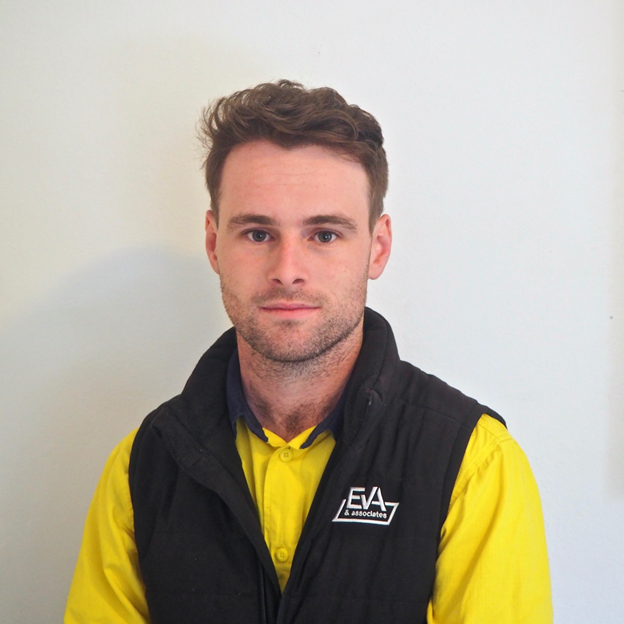
This is Michael Eva, part of the Identifibre Group Occupational Hygiene consulting team, based in Melbourne, Australia. A recent graduate of RMIT University, he was awarded the RMIT University Post Graduate Study Award for his academic endeavours. Michael's primary areas of expertise include occupational and environmental exposure assessments, predominantly in relation to asbestos, silica and isocyanates.
What first interested you about occupational hygiene?
I loved maths and science at school but didn't like the idea of being stuck in a laboratory or at a desk all day. I was lucky enough to be exposed to the world of hygiene straight out of school when I did some casual administrative work for my father (also an occupational hygienist) as a summer job. It was during this time I realised hygiene was a career that combined the data analysis, scientific thought and rich variety of work setting that I was after.
How did you get into the role you are in now?
I had a strange path to becoming a hygienist, originally studying economics whilst working for Eva and Associates performing routine calibration and basic 'pump jockey' tasks. In 2016 I began my postgraduate study in hygiene, completing my masters in Occupational Health and Safety (Occ Hygiene) in 2019 at RMIT University. Over that time I have developed my hygiene knowledge and technical skills and am now leading a team of other young hygienists within the business.
What does your job look like?
My current role in the consulting team sees me attending a range of different sites, conducting workplace risk assessments, exposure monitoring and providing recommendations on improving workplace procedures and controls. As is the nature of a consulting role, I'm likely to find myself in a manufacturing facility one day and in a quarry the next.
Whilst there are certainly some longer-term projects, I will often attend site of small to medium sized businesses with limited information as to the breadth of hazards and extent of controls in the workplace. In many cases, employers themselves may not understand the nature of the hazards in their own workplace, or will have focused all attention on one major hazard and neglected others In this case, following the process of 'assess, evaluate and control' is paramount.
Within Victoria, the recent introduction of new legislation and compliance code relating to silica and the use of engineered stone products (including bi-annual air monitoring for RCS) has seen a massive increase in stonemasons requiring the expertise of occupational hygienists. As a result, much of my time in recent months has been spent in stonemasonries and fabrication workshops conducting exposure monitoring and assessing workplace controls.
Why is Occupational Hygiene important?
The protection of worker health is of course the most important role of the occupational hygienist. However, the path to achieving this in the long term should be based upon improving the knowledge of employers and employees regarding hazards in the workplace, particularly amongst small and medium businesses. Whilst there will always be a role for hygienists in identifying and controlling well understood workplace hazards (i.e asbestos, lead, noise etc), the ability to focus on the anticipation and prevention of future hazard exposure is what will lead to the best long term health outcomes for workers. This is best displayed in large, mature businesses who with the benefit of abundant financial resources (in comparison to small/medium business), can focus on leading indicators of health and safety.
What do you enjoy most about Occupational Hygiene?
The variety of workplaces you can find yourself in is one of the best aspects of hygiene. There are certainly not many industries in which you can be in a remote location collecting samples one day and in the board room of a business the next helping them implement strategies to improve their health and safety policies.
My RMIT lecturer Susanne Tepe used to say a hygienist must 'be an expert in work'. The investigative element involved in hygiene in relation to uncovering hazardous work practices or determining likely causes of exposure is an aspect of the work I really enjoy. This is even more rewarding when the insights of the hygienist can materially improve the workplace for both the employee and employer.
What are some of the most interesting projects you worked on?
- Ongoing monitoring during decommissioning of an explosives manufacturing site with a wide range of potential chemical and physical hazards exposures including nitrobenzene, lead, asbestos and heat stress.
- Conducting experiments to determine the effectiveness of M-Class on tool dust extraction units for engineered stone works in conjunction with a major power tool manufacturer.
- Working in conjunction with TestSafe NSW in developing methods for sampling with PPI samplers and XRD analysis for crystalline silica.
- Exposure monitoring for stage crews and performers using pyro technique effects in stage productions such as Harry Potter and the Cursed Child and Aladdin.
What are some key areas we can address to strengthen the protection of worker health?
Effective hazard communication to the workforce is an ongoing struggle for many hygienists. This is particularly problematic in industries where new legislation or compliance documentation changes long held work practices, such as those changes seen across the country in stone fabrication. In recent times, I have attended Victorian stonemasonries who other than transitioning to wet cutting systems, have almost no knowledge of any other conditions in new compliance documentation. This is even more pronounced on the factory floor, where those directly impacted by the health effects of RCS lack the requisite knowledge or resources to effectively protect themselves.
The recent outbreak and mis-information about the use of masks in Victoria related to the COVID-19 outbreak has highlighted this. As the expert body in PPE, hygienists must strive to play a greater role to protect not only workers but the general public in these situations. Issues including the use of valved masks and the lack of respirator fit testing in occupational settings, although obvious areas of concern for a trained hygienist, appear to have taken time to gain traction amongst other professional bodies and the community.
Messages relating to health and safety presented in readily available mass media (at least in Victoria) tend to solely focus on the negative legal outcomes for employers, whilst I can't recall ever seeing or hearing any reasonable advice on how a worker would actually protect themselves.
Use information or resources on this area?
There is a plethora of information online regarding hazard communication. The AIOH and international bodies such a the AIHA and BOHS have webinars, chapter meetings and online forums in which hazard communication and other issues are often discussed.
For the young hygienist, seeking out the advice of an experienced certified hygienist and picking their brain on communication techniques that have worked for them in different settings is also crucial. I would highly recommend that young hygienist attend AIOH chapter meetings and the annual conference if possible, as this is often the best way of making these professional connections.
LinkedIn is also a valuable resource for information. The insights and articles shared from experienced hygienists and industry professionals can prove invaluable, particularly in scenarios such as COVID-19 where information related to workplace exposures is often changing and difficult to verify (shout-out to Kate Cole and Jane Whitelaw for leading the charge on dodgy respirators!).
And of course, the greatest resource of all, The Young Occupational Hygienist Blog.
Young Hygienist Snapshot: Megan Canright, MPH, CIH
Posted on Updated on
One of my favourite aspects of reading young hygienist snapshots is reading the life experiences of some COH/CIH giants and getting a glimpse into their professional background and experiences, (like they are mentoring without evening knowing it). So I am so grateful Megan Canright gave up her time to share her story.

Megan Canright, MPH, CIH has a wide array of experience in the fields of Industrial Hygiene and Environmental, Health & Safety. As the Corporate Director of Scientific Operations with Forensic Analytical Consulting Services, Inc., she provides company-wide technical and operational direction and facilitates the internal Quality Assurance/Quality Control program. Megan's primary areas of expertise include occupational and environmental exposure assessment, and the evaluation and control of pathogens in support of environmental infection control. Megan is a Certified Industrial Hygienist and is very active in the local San Diego and National chapters of the American Industrial Hygiene Association and serving as a current Board Member of the California Industrial Hygiene Council. She is a graduate of the 2011 AIHA Future Leaders Institute (FLI) and the recipient of the 2019 AIHA Kusnetz Award.
What first interested you about occupational hygiene?
I'm a self-proclaimed science nerd. It was the breadth of sciences involved in occupational hygiene married by the application to people that drew me towards choosing this as a career
How did you get to the role you're in now?
I started with FACS after I received my undergraduate degree from UC Berkeley in 2003. I had every intention of becoming a wildland firefighter and performing forestry and fire ecology research, but my May graduation timeframe resulted in my missing the cutoff date to apply for the training program. My track & field coach from high school, Ben Kollmeyer, MPH, CIH, who is a Principal and the Chief Science Officer with FACS, encouraged me to apply for an internship with FACS while I figured out what I wanted to do until the following fire season.
I fell in love with industrial hygiene and decided to stay the course as a career. I left FACS for a brief hiatus to attend graduate school, become certified, and then to work in the pharmaceutical industry, but returned to FACS as a Project Manager in 2011.
So essentially, I worked my way through the company from Intern to Principal. FACS has provided me with incredible growth opportunities and I am very grateful to them.
What does your job look like?
- technical work including field work, technical writing, project-specific meetings, and mentoring/oversight of technical staff;
- corporate work related to the development and implementation of our technical QA/QC program;
- business development and public outreach including client meetings, presentations, publications, organizational meetings, etc.; and
- shareholder responsibilities.

Why is Occupational Hygiene important?
Occupational hygiene is so much more than the assessment of job-related exposures for workers. As an IH/OH, equal portions of my work involve protection of public health in occupational and community (home, school, public, etc.) settings. As we know, occupational hygiene is both a science and art dedicated to the anticipation, recognition, evaluation, prevention, and control of environmental exposures and stressors to improve the health of workers. This is important because workers are more than how their jobs define them – they belong to families. The more we can advance our practice, the better we will be able to focus on the anticipation and prevention aspects of what we do to improve the health and lives of our workers at home with their families.
What do you enjoy most about Occupational Hygiene?
While my brain is in love with the complex and multi-faceted science involved in the many branches of occupational hygiene, my soul loves the passionate, unique, and brilliant people that I've connected with through FACS, AIHA, BOHS, AIOH, IOHA, and FLI who will be my forever friends. Shout-out to IHDT!
Conferences/IHDT:


Please connect with me and be one of my bee-people (reference to my IOHA ignite presentation)!
What are some of the most interesting projects you have worked on?
- Outbreak of mycobacterium infections following dental pulpotomies (i.e., baby tooth root canals) at a pediatric dental clinic
- Vapor intrusion exposure and risk assessment related to a plume of groundwater contamination under an elementary school located next to a previous aerospace manufacturing facility
- Outbreak of Legionellosis and Pseudomonas-related illness at a hospital Neonatal Intensive Care Unit
What are some key areas we can address to strengthen the protection of worker health?
Protection of worker health needs to be based in a cumulative Total Worker Heath mindset. Workers are exposed to a variety of different hazards in the workplace, community, and at home and through a variety of different exposure routes including inhalation, ingestion, and dermal routes. As hygienists, it is our responsibility to incorporate a holistic assessment of exposure into worker assessments because single exposure events or exposure to single agents cannot be viewed in a vacuum. Exposures tend to impact individuals differently based on their genetic predisposition, environmental factors, temporal and spatial variables, and other co-exposures – not to mention other health factors such as underlying physical and mental health factors. The days of looking at work-place exposures as singular from exposures in other environments should be over as far as my opinion goes!
Also, the U.S. needs to engage in the painstaking process of updating the Permissible Exposure Limits, so they are based in current science and available technology. We need to regulate occupational exposures up to the highest standard instead of down to a minimum standard.
Useful information or resources on this area?
NIOSH has a great website that explains the principles of Total Worker Health.
NIOSH Total Worker Health website:
https://www.cdc.gov/niosh/twh/default.html
The AIHA Risk Committee also develops white papers, guidance documents, and other resources related to cumulative exposure assessment:
https://www.aiha.org/get-involved/volunteer-groups
Fake or real? Do you need help on how to spot a fake P2 respirator?
Posted on Updated on
It is only May and the Australian workplace has been confronted by having to manage the impacts associated with bush fires and COVID-19. This has placed pressures on the availability of disposal particulate respirators due to their increase use and demand.
Occupational Hygienists and WHS professionals have started to realise this has resulted in a number of fake respirators being made available to our workforce. In response to this situation Kate Cole and Jane Whitelaw, Certified Occupational Hygienists have founded a facebook group Fake P2 N95 FFP2 respirators/ masks in Australia to help save us some time (thank you) and educate us on what actually a respirator conforming to Australian (or international equivalent) standard should look like, as well as show examples of fake respirators.
So how do I know my P2 is a certified P2?
A P2 respirator is a type of air purifying respirator suitable for filtering particulate only.
Particulate filters in Australia have 3 classifications and are marked as P1, P2 or P3.
- P1 intended for use against mechanically generated dusts of most sizes
- P2 intended for use against mechanically and thermally generated particulates
- P3 intended for all particulates and highly toxic materials
P3 filters provide the highest level of protection; however note P3 protection can only be achieved if the P3 filter is used in a full-face respirator.
Respirators that are compliant with Australian Safety standards will be stenciled with the filter classification (i.e. P1, P2 or P3) and AS/NZS 1716. However you can also check the manufacturer's certification via SAI and BSI certificate search.
5 tips to spotting a fake P2:
1. No marking or labeling on the filter packaging
2. No manufacture year, date code or other means of traceability
3. No manufactures name or trade name
4. Decorations or colourful fabric
5. Claims that the respirator is suitable for children (no such certification exists in Australia)
Is a P2 equivalent to a N95?
The N95 is the NIOSH (USA) classification for a disposable respirator. An N95 and P2 respirator have very similar specifications. You can view comparisons of FFP2, KN95, and N95 and Other Filtering Facepiece Respirator Classes here. NIOSH also has a webpage on how to identify counterfeit N95 https://www.cdc.gov/niosh/npptl/usernotices/counterfeitResp.html.
If you are still unsure after reading this or interested in how to spot a fake take part in the conversation with Fake P2 N95 FFP2 respirators/ masks in Australia Facebook Group.

RESP-FIT is Coming! AIOH Respiratory Protective Equipment fit testing training and accreditation scheme
Posted on
Anyone who uses tight fitting respirators needs to be fit tested but how, why and by who? Mark Reggers 3M ANZ Personal Safety Division and AIOH RESP-FIT champion explains.
What is the primary aim of RESP-FIT?
Fit testing for all tight fitting respirators (negative & positive) is a mandatory requirement of Australian Standard AS/NZS 1715 Respiratory Protective Equipment – Selection use & Maintenance and this standard also details the different fit testing methods. That means fit testing is required for…
• half-face respirators (disposable and reusable)
• full-face respirators and
• tight-fitting powered air purifying respirators aka PAPRs!
The purpose of fit testing is to ensure that the respirator is suitable for the person wearing it and that they are obtaining an adequate seal.
Respirator fit testing should be conducted before you where tight fitting respirators in the workplace. Fit testing should be repeated on a regular basis. AS/NZS 1715, specifies fit tests should also be performed annually.
With the recent focus of the regulators across the country over the past 12 months enforcing the requirement fit testing, there is much more awareness around of the requirement of fit testing in the workplace. However, there is currently no clear guidance in Australia on what defines a "good" respirator fit test and unfortunately, there are plenty of examples of poor fit testing practice and mis-information in many industries.
Whether the person performing the respiratory fit testing is someone fit testing workers within their own organisation or they have been engaged through an external company, the competence of that person is a critical component in the reliability of the fit test.
This is where RESP-FIT comes in! The AIOH approved the creation of a working group in 2019 to develop a respirator fit testing training and accreditation scheme to fill this gap in guidance and best practice to improve the quality of fit testing in Australian workplaces.
WHY is respirator fit tests and this campaign so important?
There are important implications for getting respirator fit wrong. Tight fitting respirators protect wearers from harmful airborne contaminants. Therefore if the wearer doesn't achieve a good seal because of a variety of reasons:
- including incorrect size or or shape of respirator for user (not one size fits all)
- facial hair
- improper placement of respirator straps or position etc…
The airborne contaminants will leak into the respirator and not provide the level of protection that is needed for the wearer.
Mark provided us an update at the 2019 AIOH Perth conference in the concurrent session on this campaign. This concurrent session was a full-house so it was clear to me that as professionals, Occupational Hygienist's and Work Health and Safety professionals have an understanding why respirator fit testing is important and why fit testing needs to be undertaken by a competent person.

So what is the RESP-FIT working group currently working on?
An expression of interest went out in early 2019 for those interested being part of the working group. The response was amazing with over 30 submissions received. Given the large scope of the project all expressions were accepted to be part of the working group.
With such a large group there were smaller technical different group created to focus on different aspects of the proposed scheme being training, accreditation and a communications. There is also a lead steering group to ensure communication across the these group and lead the project overall.
The training technical working group has developed a draft training course syllabus and approval process of training providers. It is currently proposed that the training providers would develop their own course against the developed syllabus and submit for review and approval. Training companies and trainers would need to meet minimum experience and training qualifications. The draft syllabus is going through final review before it is to be submitted to the AIOH council.
The accreditation technical working group has developed through much discussion the conceptual frame of the accreditation process. It is currently proposed this will involve and online exam then submit a video of a fit test being performed for review against set criteria. This online approach will make it more accessible for all fit testers no matter where they are in Australia. Next stage to develop the documentation and process for the proposed framework
The communications group has been working hard well. They have created a number of draft FAQ's/Fact Sheets that will be made available on a future RESP-FIT website to provide information and education. They also have been investigating other organization and opportunities where we can present/educate workers on the importance of fit testing but also the AIOH is working on a scheme around fit test training and accreditation.
As much as has been achieved in 2019 through a lot of hard work, there is much more to be done and processes developed in 2020.
So everyone! Watch this space as you will be hearing a lot more about RESP-FIT in 2020 as we work toward target launch period of late 2020 or early 2021.
For further information you can email respfit@aioh.org.au or contact the AIOH Office
OH Research Bites: Andy McCarthy
Posted on Updated on
One of the main reasons why I wanted to get online was to promote the field of occupational health research (because it matters) as well as the personal viewpoints of the person(s) behind the research. I read about Andy McCarthy's research on the prevalence of non-communicable disease risk factors in miners before I met him at AIOH 2019 annual conference. So pretty chuffed he wanted to share about his research in this forum and share his perspective of why it matters.

But first a bit about Andy McCarthy! He is the Principal Advisor Health and Hygiene at Oyu Tolgoi Mine in Mongolia, Rio Tinto. He has been working in and around Occupational Hygiene since 2007. He started in the field much like many of us and fell into it. He was Project Managing at a consulting company and found himself (thanks to the GFC) with no staff to do the field work. Within the business there were some really good hygiene people in the Eastern and Western states, so via skype, he learned the basic skills he needed to get out there and do some monitoring. From consulting, he moved into mining and has been there ever since, along with a stint in Oil and Gas. He received his COH accreditation in 2017.
Andy McCarthy took the role he is in now and re-joined Rio Tinto in early 2018, he has been living in Mongolia since then with the occasional trip home (conveniently around conference time) with his wife Rosie. They are currently into their third winter in Mongolia, which makes them locals according to some of their Mongolian friends.
He has been at University for about the last 10 years, most recently graduating with a Master of Public Health. Previous to this degree, he studied a Graduate Certificate of OH at UoW (2010), a Graduate Diploma OHS at Edith Cowan (2013) and a Master of OH and Toxicology at Edith Cowan (2015). He plans to do a PhD sometime, and is currently thinking of the question that he wants to find the answer to – it hasn't come to him just yet!
What first interested you about occupational hygiene?
When I began working around the OH area, my role was almost all focused on asbestos management, monitoring and removal, I found this very interesting and learnt a lot about the mineral in a short time frame. The asbestos work lead to other projects which were a bit more technical (VOC, noise etc). This really spiked my interest and when I began in mining; monitoring, managing and educating people about the health risks they face while at work gave me the job satisfaction I had been looking for and quickly became a passion. I went to university education soon after joining mining to get a better understanding of the intricacies and technical knowledge in OH.
How did you get to the role you're in now?
I had been becoming increasingly restless in my previous role as I couldn't visualise the next step for me within the business. I had also been quite keen to work either offshore or overseas. The role in Mongolia came up at a good time for me and I was fortunate to have the right skill set at the right time to be successful in my application. I also had kept in touch with some senior Rio Tinto people who had been mentors for many years, I am sure there was some influence there..
Why is Occupational Hygiene important?
A question that I have found myself having to answer many times in my career.. Our brand still has challenges around the knowledge of what we actually do, still I find myself having to explain what an occupational hygienist does. Hopefully following the Perth conference we see an increase in knowledge of what we do and why we do it.
I think the role of an OH is vitally important to any organisation to provide an understanding of the health risks associated with work and providing the tools to ensure the exposure risk is mitigated. Couple this work with workforce education to the people on what they are working with, the exposure risk and the control measures gives an understanding of why there are certain requirements in place at work. People wearing for PPE just because the boss told them too should never happen, but I still see this frequently in and out of Australia. We need to ensure everyone knows control measures have been implemented and give them the tools to make informed decisions about their own health. That is the core role of an OH in my view.
What are you currently researching or working on?
My research work has been more related to Public Health in the last 2 years. I've moved focus as it fits the health risk profile of the workers at Oyu Tolgoi. While we do have OH risks (of course), the risk to general health and population health is also quite high for a number of reasons (weather, atmosphere, pollution, diet, lifestyle etc). OH is managed well and the data tells us that health risks, while present, are reasonably well understood and controlled and I have a good OH team in place. We do have a reliance on PPE which is not ideal, however, there are some long term projects which are focussing on engineering controls.
I recently published a research paper in the Journal of Occupational and Environmental Medicine titled 'Non-communicable disease risk among a cohort of mine workers in Mongolia'. This research explored the current health status and future risk of development of NCD in a cohort of 1169 mine and mineral processing workers. The study population results gave us confidence (95%) in expanding the results to assess the health risk of the entire workforce. The information we gathered is being used to re-design wellness programs at the site which includes take home information for families in an attempt to educate people into reducing their risk.
I have also presented papers on Urbanisation and Pollution in Ulaanbaatar (challenges and opportunities); Health Impact Assessment and Interventions for Wellness Strategies at conferences and forums. I am currently preparing a presentation for a Wellness conference in Singapore.
I haven't decided what I want to research next. If I work it out, you may well hear about it at AIOH Adelaide 2020!
Why did you choose to research on this topic?
In my role, I look after Medical, Health (occupational and general) and occupational hygiene. On review of the health data and periodic medical assessments, I noted some patterns within our population. I then checked into the most recent Health statistics for the general population of Mongolia and got to wondering.. How do we shape up when compared with the general population? I expected to see some evidence of the healthy worker effect and gather the information I needed to specifically target the more prevalent health issues with wellness interventions.
What have you found in your research?
Not really what I wanted to see if I am honest.. The results were not as positive as I thought they might be and are pretty close to the general population. The most damning statistic was smoking and drinking habits, as the workers in general have more disposable income, the smoking and drinking rates were higher than the general population. The site offers the chance to eat three hot meals per day which are protein and carbohydrate rich, this along with sedentary lifestyles has shown an obesity rate greater than the general population. The comparison for hypertension was positive which is associated not necessarily with the healthy worker effect, but more so with age. The study cohort mean age was 35.
We have some challenges in front of us to ensure the long term risk of chronic disease is managed. There are many lifestyle and social factors which we are targeting with interventions to improve general health. These are traditionally very difficult to change, but we will give it our best shot.
Why is your research important?
In my experience over the last 10 years, there has been a lot of focus at work around occupational hazards and risk. While this is essential, the wellness programs have not been given the same stage (or budget). Public and general population health is important in ensuring you have a long term workforce who are capable of attending their job every day for perhaps 40 years. Chronic disease is a global issue and is known to cause up to 71% of premature deaths (WHO). I wanted to understand where our work population sits in comparison with the WHO results and the Mongolian health impact assessment study of 2013. The results are being used to refresh the wellness program to ensure we are targeting areas where we will see a measurable impact.
Where can people can people get more information about your research or topic?
Please follow the below link and read more about Andy's paper here https://journals.lww.com/joem/Abstract/2019/12000/Non_Communicable_Disease_Risk_Factors_Among_a.16.aspx

(Welcome Back) Young Hygienist Snapshots: Andrew Orfanos
Posted on
Happy new year everyone!
<Warning Learner Blogger>
I happened to see a post a few weeks ago by Kate Cole (who you should know initially created this blog), providing a community service announcement about the importance of us (aka Occupational Hygienist's) to get out there e.g. on twitter and provide good useful information. So I made a call, thank you Kate, who welcomed the idea of bringing back the Young Hygienist Blog. So here goes…
Andrew Orfanos, is the Owner / Director of Advanced Occupational Health & Hygiene Solutions. He Started his hygiene career back in 1996 in the Department of Community Medicine at Adelaide University where he worked in the Hygiene laboratory, provided consulting services and participated in hygiene related research projects. In 2004, he took up the role of Senior Occupational Hygienist at the Nyrstar (nee Pasminco, Zinifex) Port Pirie Lead Smelter. In 2008 moved to Melbourne to take up the position of Manager Health & Hygiene, HSEC Group Function, BHP Billiton. He then spent 9 years at Caltex as the National Health & Hygiene Specialist before starting my own private consultancy in August of 2019.
What first interested you about occupational hygiene?
It was an opportunity to actually apply what I learned from my Science degree in the real world! I majored in pharmacology and toxicology, so it made sense falling into occupational hygiene, a profession where we try and stop nasty workplace chemicals and hazards getting into the body and having an impact on health. I should point out that when I was offered an "apprenticeship" at the University of Adelaide, I had no idea what occupational hygiene was. Job opportunities in science related fields was very difficult to come by in the early to mid 90's. I was hand delivering gas bills for SAGASCO when I managed, through a friend's father, to get in front of the then Dean of Medicine at Adelaide University, Professor Derek Frewin. In our ten-minute chat I communicated my frustration at not being able to land a science related job opportunity and within a week I had what one would call an unofficial apprenticeship with the legendary Dr Dino Pisaniello as my mentor! I was only recently told by Dino his version of how I came to be at the Department of Community Medicine; he received a phone call from Professor Frewin, who told him that I was a good boy and that he should give me a job!
How did you get to the role you're in now?
Twenty plus years working in occupational hygiene, and a grateful redundancy package from Caltex!
What does your job look like?
A bit scary at the moment, having moved from working with large businesses such as BHP Billiton and Caltex where I was assured of a monthly salary to that of a consultant where you work harder and then hope you will get paid eventually! But what I love is the fact that my job can look like anything, the variability in the workplaces, hazards and work scopes is what really excites and energizes me. In the brief couple of months as a consultant, I have worked in a range of different industries and hazards, and have even spent time working in Saudi Arabia!
Why is Occupational Hygiene important?
Everyone spends so much time at work. Many people don't get the luxury of picking and choosing what they do for a living and many have to undertake work activities that expose them to a range of environmental stressors that over time not only impact their quality of life, but can also shorten their life! These people, for numerous reasons are unable to advocate for safe and healthy work conditions, and this is where we come into the equation. We have the specialist knowledge to identify those not so obvious workplace hazards that may not necessarily kill a worker straight away but can insidiously, over time affect their quality of life and life expectancy. We also have the expertise to identify and implement effective, fit for purpose controls in the workplace to allow workers to safely make a living for themselves and their families without risk of harm.
What do you enjoy most about Occupational Hygiene?
The variety of workplaces that this profession takes you to. The opportunity to be able to see a wide variety of workplaces and understand how things are done; how things are dug out of the ground, how things are manufactured and built. We are so lucky!
What are some of the most interesting projects you have worked on?
There isn't too many workplaces that I haven't been to. ACI Glass, Coopers Brewery, Mitsubishi, Holden, Goodyear, Buttercup, Coca-Cola Amatil, to name a few. My auditing experiences at BHP Billiton were incredible, from the Ekati Diamond mine in the Northwest Territories of Canada to the Manganese mines of Hotazel in the Kalahari Desert in South Africa. One of the funniest (from a hygiene 'nerd' perspective) jobs I did was at the Morgue at the bottom of the Adelaide University Medical School where they would prepare bodies that were kindly left for scientific research. I was characterizing worker exposure to formaldehyde, the names of the two workers that I was monitoring were called STELios and WESley! Seriously, what are the odds!
What are some key areas we can address to strengthen the protection of worker health?
For me the first thing that pops into my mind is better worker engagement and communication of workplace hygiene hazards to those potentially affected. The recent example of accelerated silicosis in the manufactured stone industry is a perfect example. The next obvious opportunity is horizon scanning; industry and technology is changing rapidly. If we don't have the right people having the time and resources to look into the potential health risks associated with new industry and technology we will continue to see 'unexpected' hygiene related occupational illness and disease arise in the workplace. And finally, we need to also focus on those hazards traditionally placed lower in the workplace risk profile that almost always never get any attention, because either the focus is on things that injure or kill people quicker or there isn't the time, money, or anyone in the workplace with the expertise to identify such hazards in the workplace or identify and implement effective workplace controls. Hazards / risks that come to mind are sedentary workplaces, vibration (hand-arm and whole-body), and psychological wellbeing.
Useful information or resources on this area?
For me the first port of call is almost always the UK HSE webpage; https://www.hse.gov.uk/ I also strongly recommend that you are pro-active in keeping up with new information, scientific research and emerging issues by signing up to as many emailing lists as possible; CDC, Journals, Regulatory groups and professional organizations. Also, with my network of professional colleagues there is almost always someone who is considered the go to person or expert with respect to a particular hazard or risk that I can email or phone. And that's another great thing about the occupational hygiene profession, there is a great comradery and friendship amongst our profession where hygienists love to talk 'shop' and help each other out. There is a great sense of "we are all in this together"!

Young Hygienist Snapshot: Mark Reggers
Posted on Updated on

Wow blast from the past! Sometimes life gets in the way of a good blog…and that's the only excuse I have for being so tardy when showcasing the fabulous hygienists of the world. Please forgive the time between posts…and welcome the first young hygienist snapshot of 2016 – Mark Reggers.
Mark first came across Occupational Hygiene through his role as an Account Manager at Protector Alsafe selling safety equipment and training in Newcastle and the Hunter Valley. He was always more interested in the reasons why and how a certain level of PPE was determined as a suitable control measure for the customers he was dealing with, so we went to the AIOH 5 day Basic Principles Course to help him to assist customers in good hygiene practice and to be able to identify situations when they should engage a hygienist. Mark enjoyed this course so much he enrolled in a Graduate Certificate in Occupational Hygiene through the University of Wollongong in 2012. After a few subjects though he was hooked and continued his studies to complete a Masters degree and pursue a career in Occupational Hygiene. After graduation, he was fortunate enough to be able to transfer across to Greencap (sister company of Protector Alsafe) in April 2015 to start his career in Occupational Hygiene as a consultant and he hasn't looked back! So here is 5-minutes with Mark:
Best location I have worked: No one location stands out but just the variety of different industries and workplaces is amazing. Being able to going behind the scenes at these workplaces is always interesting.
The best thing about my job is: The variety of work as no 2 days are the same. One day you will be dust monitoring then the next noise assessments then asbestos clearance certificates. Also not being stuck behind a desk in an office and getting out and about is great.
Career Highlight: Being so new into my Hygiene career after choosing a career change I would have to say getting my first job in Occupational Hygiene after completing my studies in 2014. Also attending my first AIOH Conference in Perth and meeting other people who get excited over dust as well. I was told was great they are and I wasn't disappointed.
If you want to be an Occupational Hygienist, you'd better get used to: Early starts on sites, some long days, as well as explaining what you are doing and why.
People normally think my job involves: Hand washing and toilet cleaning.
The best thing I've been asked to do was: Dust sampling where they make chocolate food products. Tastiest dust sampling I will probably ever do.
The worst thing I've been asked to do was: There hasn't been anything that bad yet, but you never know what the next job will be. It wasn't a Hygiene job but I was helping our Environment team undertake Groundwater monitoring. Wandering around a landfill site in shoulder height grass in 40 degree heat for 10 hours wasn't the most fun of days.

Instagrams of the Week!
Posted on Updated on
Here we have it – – – – Instagrams of the Week! 😀
Remember, if you want to see your awesome pictures feature here just tag you grams with #occupationalhygiene #industrialhygiene #occupationalhygienist and #industrialhygienist
So what hygiene work happened across the globe this week?
The Occupational Hygenius (awesome name BTW) @the_occupational_hygenius evaluated the effectiveness of "respiratory protection"
Ingrid @icmagordis even with five bags strapped to her body had a spare hand to take a selfie (love it!)
https://instagram.com/p/4S0gnGMUue/?taken-by=icmagordis
Meanwhile, Melissa Milo @mel_milo has been looking #distractinglysexy in Western Australia
https://instagram.com/p/3_I-8bsrLP/?taken-by=mel_milo
And Mike Slater @ms6282 recognised where some controls wouldn't go astray
Young Hygienist Snapshot: Prescillia Chua AKA "Percy" [International Edition]
Posted on Updated on

When I met Prescillia Chua "Percy" recently in Salt Lake City at #AIHce2015 I didn't have to spend much time with her to know she has a remarkable amount of energy and a true zest for life.
Percy received a Bachelors of Science from the University of Alberta, majoring in Laboratory Medicine. And after working as a scientist in the Provincial Laboratories through the SARS epidemic, she decided that her social skills muscle needed more flexing. This lead Percy to research occupations that better meshed science and people and, as a result, she completed her Masters in Occupational Health at the McGill University in Montreal, Canada.
Percy's work journey has been an adventure ever since and includes the oil sands in Fort McMurray, Alberta (apparently majority of Canadian OH's do their time there!) to the provincial healthcare system, to her current position as an Occupational Hygiene Officer with WorkSafeBC – – – the British Columbia provincial regulator of OHS.
Volunteer-wise, Percy has served on the board of the AIHA BC-Yukon local section for several years, including a term as President. Percy is currently the Western Director on the Canadian Registration Board of Occupational Hygienists (the equivalent of the ABIH in Canada).
So here's 5 mins with Percy:
1. Best location I have worked: Is it cheesy to say my current location? Vancouver, British Columbia has warm summers, mild winters with endless access to the ocean and outdoors. I couldn't ask for a more beautiful place to work and live!
2. The best thing about my job is:As part of my job, I have the opportunity to observe a variety of work sites. Every day is a field trip. I've seen OH issues like heat stress in a chocolate factory churning out sweets for the Halloween rush, biohazard issues in an abattoir during "pig day", noise concerns in coffee roaster during packaging, carbon dioxide exposures during fermentation in a craft brewery (can you tell my passion is food?). I'm privileged to interact with front-line workers to ask poignant questions, and ensure that individuals in the workplace remain safe while they do their job.
3. Career Highlight:Pressing the "submit" button on the online CIH exam, agonizingly watch the progress bar run across the screen… and receiving my CIH on my first go!
4. If you want to be an Occupational Hygienist, you'd better get used to: The variety of work, and thinking "on your toes". No day is the same, despite any scheduling – I could be sitting in a pre-construction meeting for a development, and then get called to respond to an emergency release of a hazardous substance, or investigating an occupational disease claim in chicken coops or examining thermal stress in steel foundry workers. It's difficult to prepare for such a variety of situations, so quick thinking and being a modern-day MacGyver is important. Lesson learned: duct tape should be in any OH's arsenal of field resources!
Also, be ready to respond to glazed looks or scrunched faces when asked "what do you do?"… which leads to the next question
5. People normally think my job involves:Breaking down the words "Occupational Hygienist" and "Occupational Health", people think one of three things:
- "Occupational" must have something to do with physiotherapy
- "Hygienist" must do with cleaning teeth (or armpits!)
- "Health" must mean inspecting food facilities for health violations.
6. The best thing I've been asked to do was:Have I mentioned my passion for food? I enjoy learning about how food travels "from farm to table" and how our food is made and processed. Any time I've had the opportunity to work with the food industry has been a bonus for me.
7. The worst thing I've been asked to do was:Respond in the middle of the night to a death in the workplace. Luckily the fatality was from pre-existing cardiovascular issues (not from an OH exposure) – however this incident wasn't all that bad considering it could have been much worse; I've yet to attend a gruesome fatality (knock on wood!)

Celebrating #distractinglysexy posts of the Week!
Posted on Updated on

As a tribute to all the Women Scientist's out there, we here at the younghygienist.com loved all of the #distractinglysexy posts in response to biochemist Tim Hunt's comments regarding the "trouble with girls" in laboratories.
So what #distractinglysexy work happened across the globe this week?
Geeky Girl Engineer looked #distractinglysexy in her Level A PPE.
Yes I know I am #distractinglysexy in my Level A PPE. The suit totally flatters my curves. http://t.co/LUb5nXx9yO—
Geeky Girl Engineer (@gkygirlengineer) June 11, 2015
It's not just @AmyRemeikis who's glad that Curie managed to take a break from crying to discover radium and polonium!
I'm really glad that Curie managed to take a break from crying to discover radium and polonium #distractinglysexy http://t.co/txYVHoidK5—
Amy Remeikis (@AmyRemeikis) June 11, 2015
Meanwhile, Kristy Thornton @ktworkrestplay shows us how to be a distractingly sexy #occupationalhygienist while working at a contaminated land remediation site
And Kate Cole @katecole111 is making all the boys fall in love with her #impossibletogetanyworkdone
https://instagram.com/p/30n9a4L1u7/?tagged=occupationalhygienist
- Follow Following
-
 The Young Occupational Hygienist
 -
Already have a WordPress.com account? Log in now.
-
-
- The Young Occupational Hygienist
- Customize
- Follow Following
- Sign up
- Log in
- Report this content
- View site in Reader
- Manage subscriptions
- Collapse this bar
-
blackfordhationen.blogspot.com
Source: https://younghygienist.wordpress.com/
0 Response to "Being an Industrial Hygienist Is Like Funnies"
Publicar un comentario